How Do You Choose the Best Compliance Management Software in India?
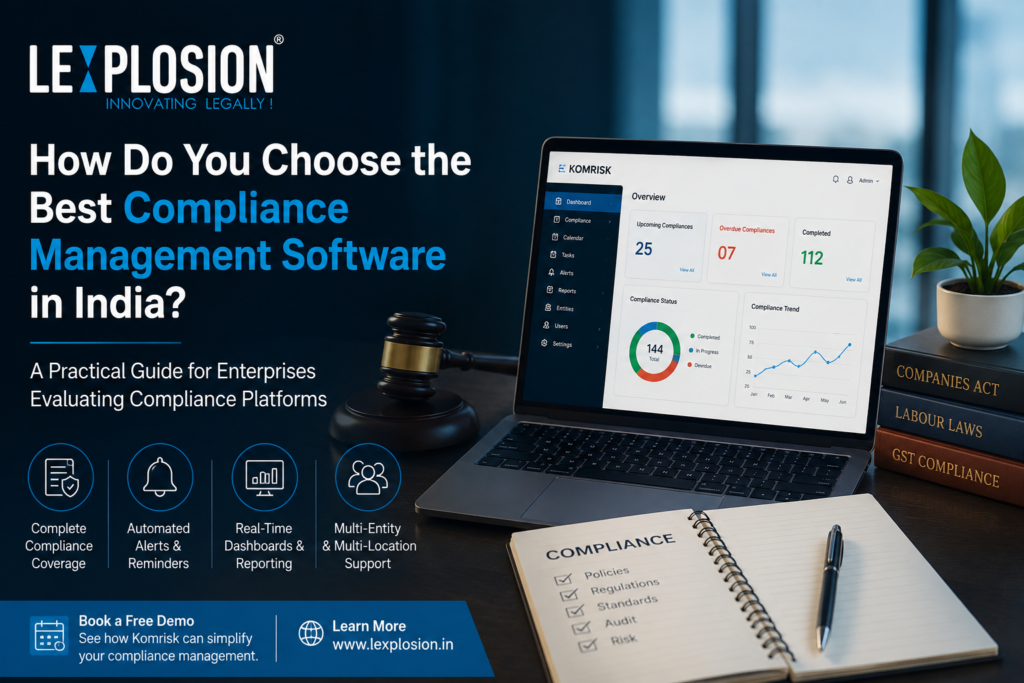
If you’re shortlisting vendors for a compliance platform, the answer comes down to three things: complete coverage of central and state law, automated alerts that reach the right person before a deadline slips, and a dashboard your leadership team can actually read at a glance. At Lexplosion, we’ve watched India’s regulatory load grow heavier every year. In 2024 alone, businesses had to track 9,331 regulatory updates, an average of 42 changes a day, according to TeamLease RegTech’s compliance data.
That pace is exactly why enterprises are moving away from spreadsheets towards proper compliance management software built for scale, and why sound compliance reporting software matters just as much as the tracking layer underneath it.
This piece walks enterprise buyers through what to check before signing a contract, based on what we’ve learned building compliance solutions for Indian companies since 2007.
Why Do Enterprises Need Compliance Management Software in India?
India’s compliance environment isn’t one law, it’s hundreds, spread across the Companies Act, labour codes, sector regulators like SEBI and RBI, and state specific rules that change from state to state. A compliance management software India teams can rely on needs to map every one of these obligations to the right entity, location and department, then track them to completion.
The Real Cost of Getting It Wrong
Missing even a handful of filings can cost more than a late fee. Enterprises typically face:
- Interest and penalties on overdue statutory payments
- Director disqualification under the Companies Act
- Licence suspension or cancellation in regulated sectors
- Reputational damage during investor due diligence
- Escalating fines for repeat or continuing defaults
For a company operating across multiple states, tracking this by hand is close to impossible. A spreadsheet can hold a list of deadlines, but it can’t nudge the plant manager in Pune three days before a licence renewal, or flag that a new state amendment now applies to your Gujarat unit. That’s the gap enterprise-grade software closes.
What Should Be on Your Enterprise Buyer’s Checklist?
Before you sign with any vendor, run their platform through this checklist.
Regulatory Coverage and Update Frequency
Ask how often the compliance database is refreshed, who tracks the updates (lawyers or algorithms), and whether state amendments are covered alongside central law.
Automation, Alerts and Dashboards
Real-Time Visibility for Leadership
Your compliance head shouldn’t be pinging five different managers on WhatsApp to find out what’s overdue. A good system pushes reminders on its own, escalates automatically when something’s ignored, and gives you one screen showing what’s late, what’s pending and what’s already ticked off, broken down by entity and rolled up at group level.
Integration and Scalability
Multi-Entity, Multi-Location Support
Got subsidiaries in three states and a branch office in two more? The platform needs to cope with that out of the box, role hierarchies, entity-wise reporting, a consolidated group view, without your IT team building a workaround every time you add a location.
Role-Based Access Controls
Compliance owners, reviewers and approvers all need different permissions. Check if this is configurable, not a one-size-fits-all login.
If you’d like a working copy of this checklist mapped to your industry, get in touch with our team and we’ll walk you through it.
Looking for a Compliance Management Software?
If you’re evaluating compliance software for your organisation, explore Lexplosion’s compliance management solution to understand how it can help centralise obligations, automate workflows, monitor regulatory requirements and improve compliance visibility.
What Makes Komrisk the Best Compliance Management Software in India?
Komrisk, built by Lexplosion, has been tracking statutory compliance for enterprises since 2012. The platform maps applicable central and state laws to each entity, sends alerts well ahead of due dates, and gives compliance heads and management a single dashboard covering every location. Clients such as Asian Paints, Pidilite Industries and Thyrocare Technologies have told us that the daily legal updates and responsive support are what keep their teams audit-ready, not just the software alone. For context on how central regulators like the Ministry of Corporate Affairs structure filing obligations, their portal is a useful reference point for any enterprise building an internal compliance calendar.
Want to see how Komrisk handles your specific regulatory footprint? Book a free demo and we’ll run through your entity structure with you.
How Is Compliance Monitoring Software Different from Basic Tracking?
Basic tracking tells you what’s due. A proper monitoring layer goes further: it flags risk before a deadline arrives, records evidence of completion, and gives auditors a clean trail without anyone digging through email threads. The difference shows up during an actual regulatory inspection, when a spreadsheet simply can’t produce the paperwork fast enough.
Which Compliance Management Systems Features Actually Matter Most?
Not every feature a vendor demos actually matters once you’re using the thing daily. Here’s what we’d push back on if we were sitting on your side of the table:
- Is the compliance library kept current by legal researchers, or is it just scraped by a script and hoped for the best?
- Do the workflows bend to fit how your approvals already work, or do you have to change your process to fit the software?
- Can your site or plant staff actually use it from a phone, or does it need a laptop and a login nobody remembers?
- Can you pull a clean, audit-ready report for the board without exporting three spreadsheets and stitching them together?
- When something breaks, does support answer in hours, or does the ticket sit for two days?
Get these right and the manual grind drops off fast, usually within the first few months.
How Should You Evaluate Legal Compliance Software Vendors Before Signing?
Don’t treat this like a routine software purchase. You’re signing up for a multi-year relationship with whoever tracks your legal obligations, so it’s worth the extra week of diligence.
- Request a live demo with your own sample entity data, not a generic pitch deck
- Ask for reference clients in your sector and actually call them
- Confirm data security certifications such as ISO 27001
- Clarify onboarding timelines and who owns data migration
- Check whether pricing scales predictably as you add entities or users
A short trial, where your team tests real alerts and reports, tells you more than any brochure. Watch how support handles a genuine query during that trial too, since the response time you get as a prospect rarely improves once you’re a paying customer. If you’d rather skip the guesswork, our team can set up a pilot on your own compliance data so you see exactly how it performs before committing.
Building an Enterprise Compliance Strategy Around the Best Compliance Management Software
Choosing the right platform isn’t just an IT decision, it shapes how confidently your legal, HR and finance teams operate day to day. Enterprises that get this right treat the buyer’s checklist above as a starting point, then test vendors against their own regulatory footprint rather than a generic demo. Komrisk was built with exactly this enterprise lens in mind, and Lexplosion’s team works alongside your compliance function rather than simply handing over a licence key. While establishing these organizational frameworks is vital, deploying an enterprise-grade regulatory compliance management software is essential to map, manage, and audit your statutory requirements seamlessly across multiple states.
Frequently Asked Questions
1. What is the best compliance management software for Indian enterprises?
Honestly, it depends on how many entities and states you’re dealing with. But for multi-location businesses navigating Indian central and state law, Lexplosion’s Komrisk was built for exactly that problem, so it tends to be a strong fit.
2. How much does enterprise compliance software typically cost in India?
It comes down to how many entities, locations and users you need covered. Lexplosion doesn’t run a flat fee, we quote based on your actual footprint, so drop us a line and we’ll work out a number for you.
3. Can Komrisk handle compliance for multiple states and business units?
Yes, that’s the core of what it’s built for. Multi-entity, multi-location tracking with role-based dashboards is why a fair few listed companies run their entire group through it.
4. How is Lexplosion different from other compliance vendors?
Lexplosion has been in legal tech space since 2007 and pairs its Komrisk software with a legal research team that tracks regulatory changes directly, rather than relying only on automated scraping.
5. Do I need training to use Komrisk?
Lexplosion provides onboarding, user training and ongoing support as part of implementation, so most teams are comfortable using the platform within the first few weeks.
If you’re ready to compare options properly, request a demo of Komrisk and see how an enterprise compliance platform should actually work.

Lexplosion Solutions
https://lexplosion.in/Lexplosion Solutions Private Limited is a pioneering Indian Legal-Tech company that provides legal risk and compliance management solutions through cloud-based software and expert services.