UK Digital Waste Tracking: What Permitted Waste Facility Operators need to know
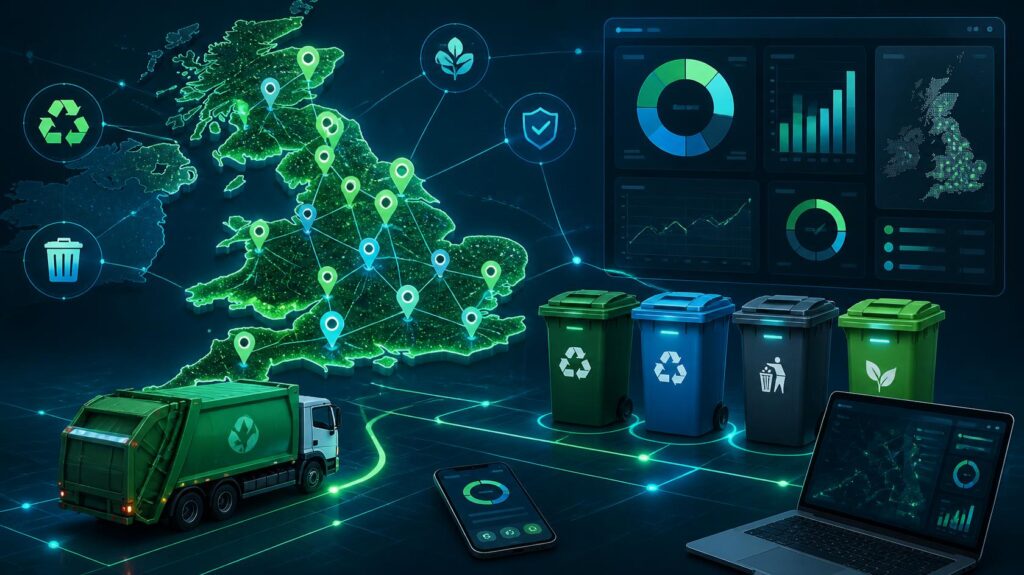
England is transitioning from a fragmented, largely paper-based waste records towards a centralised digital reporting system. The Digital Waste Tracking (England) Regulations 2026[1] (Regulations)establish the statutory framework for this transition by introducing mandatory reporting requirements for operators of permitted waste facilities.
The Regulations are made under sections 34CA and 34CB of the Environmental Protection Act 1990 and apply to operators of permitted facilities in England and will come into force on 1st October, 2026.
While the broader policy objective is to create an end-to-end record of waste movements, the initial implementation phase primarily focuses on permitted facilities receiving controlled waste. Waste carriers, brokers, dealers and registered exempt waste operations are expected to be incorporated more comprehensively into the system during subsequent implementation phases.
Why has Digital Waste Tracking (England) Regulations 2026 been introduced?
The current reporting system of waste management depends on multiple independent systems and records maintained by different participants across the waste chain, which complicates the work of regulators to obtain a complete and timely picture of waste movements and to check compliance with environmental permits and waste legislation. With a view to address these problems, the UK Government has decided to introduce digital waste tracking to consolidate fragmented records, improve transparency at the individual-load level, strengthen regulatory oversight and combat waste crime which is estimated to cost the UK economy approximately £1 billion annually.
Applicability and who must comply with the Digital Waste Tracking (England) Regulations 2026?
The principal obligations under the Regulations apply to an operator of a permitted facility[2] when the facility receives controlled waste.
Primarily the Regulations impacts operators of facilities such as waste treatment facilities, recycling and recovery facilities, permitted transfer stations, permitted storage facilities, landfills, incineration and energy-from-waste facilities and permitted mobile plant deployments receiving waste.
The Regulations apply to the receipt of controlled waste, including household, commercial, industrial and hazardous waste as well as waste containing persistent organic pollutants. While household waste deposited by residents at designated waste disposal authority facilities is exempt, commercial waste received at permitted household waste recycling centres in England remains subject to the digital tracking requirements. The initial implementation phase will not cover waste operations carried out only under registered exemptions, which are expected to be covered by the framework in a later phase.
Key Takeaways under Digital Waste Tracking (England) Regulations 2026
- The Regulations come into force on 1st October, 2026 and initially apply mainly to operators of permitted waste facilities that receive controlled waste in England.
- A separate digital waste record must be created for each load of controlled waste received, including relevant commercial, industrial and hazardous waste[3].
- The required information must be submitted to the digital waste tracking system by the end of the second working day[4] following receipt.
- Compliance is completed only when the system generates a unique digital waste record number[5]. An attempted or rejected upload does not satisfy the requirement.
- Records must contain key information relating to the facility, carrier, vehicle, waste code, weight, treatment or disposal method and where relevant, hazardous properties and persistent organic pollutants.
- Existing documents such as waste transfer notes, hazardous waste consignment notes and permit returns will remain in use during the initial transition period.
- Incorrect records must be corrected as soon as reasonably practicable and within one month of the error being identified.
- During a qualifying system outage, operators must maintain temporary records and upload the required information within seven days after the outage is resolved.
- Non-compliance may result in criminal prosecution, a fixed monetary penalty of £1,000, variable monetary penalties, compliance notices and publication of enforcement information.
Compliance Action Points for Operators of Permitted Waste Facilities
Operators of permitted waste facilities should:
- Confirm applicability by identifying every permitted site and waste-receipt activity falling within the scope of the Regulations.
- Upgrade or integrate waste-management systems to capture all required information and submit it through approved software.
- Review and strengthen waste-acceptance procedure to verify carrier details, vehicle registration, waste codes, weights, hazardous properties and permit compatibility before accepting a load.
- Designate clear responsibility for preparing, reviewing, submitting and correcting digital waste records.
- Introduce deadline alerts and audit trails to ensure each record is submitted within two working days and is linked to its unique digital record number.
- Create outage and correction procedures for system outages, rejected submissions and inaccurate information.
- Provide training to gatehouse, weighbridge, operational and environmental compliance teams before the commencement date.
- Reconcile digital records with existing documents, including waste transfer notes, consignment notes, weighbridge records and regulatory returns.
What should operators do now?
Operators must begin the process of planning and implementation right away by ascertaining whether their facility falls under the purview of the Regulations, evaluating existing data and software capability and identifying deficiencies in their waste acceptance and reporting practices. In addition, they must assign responsibility, conduct testing of submission systems and train personnel prior to 1st October, 2026 to ensure a smooth transition and avoid compliance issues once digital reporting becomes compulsory.
Conclusion
Digital Waste Tracking (England) Regulations 2026 is expected to bring about a significant change from fragmented waste documentation to a transparent, data-driven compliance regime. Permitted facility operators will be expected to not only record waste movements digitally, but also ensure that every submission is accurate, timely and capable of regulatory scrutiny. As the regulations come into force from 1st October, 2026, operators who take proactive steps now to prepare for the new requirements will be better placed to manage the transition, demonstrate lawful waste handling and reduce compliance risk.
Author: Rohini Hazra
Edited by: Antara Dasgupta
This content is intended for informational purposes only and does not constitute a legal opinion. Readers are encouraged to seek legal counsel prior to acting upon any of the information provided herein. Despite our efforts to maintain accuracy, we do not make representations, warranties or undertakings regarding the quality, completeness or reliability of the content. This content, including the design, text, graphics, their selection and arrangement, is Copyright 2026, Lexplosion Solutions Private Limited or its licensors. ALL RIGHTS RESERVED, and all moral rights are asserted and reserved.
For any clarifications, please reach out to us at 91-33-40618083 or inquiries@lexplosion.in. Refer to our privacy policy by clicking here.
[1] https://www.legislation.gov.uk/uksi/2026/729/pdfs/uksi_20260729_en.pdf
[2] The Digital Waste Tracking (England) Regulations 2026, S.I. 2026/729, Regulation 2: “operator of a permitted facility” (or “the operator”) means the person who is authorised under an environmental permit to operate a permitted facility.
[3] The Digital Waste Tracking (England) Regulations 2026, S.I. 2026/729, Regulation 2: “hazardous controlled waste” means controlled waste that is, household waste, industrial waste or commercial waste which is hazardous waste.
[4] The Digital Waste Tracking (England) Regulations 2026, S.I. 2026/729, Regulation 2: “working day” means a day which is not a Saturday or Sunday, Christmas Day, Good Friday, or a bank holiday in England under the Banking and Financial Dealings Act 1971.
[5] The Digital Waste Tracking (England) Regulations 2026, S.I. 2026/729, Regulation 2: “digital waste record number” has the meaning given in Regulation 3(4)(a).

Lexplosion Solutions
https://lexplosion.in/Lexplosion Solutions Private Limited is a pioneering Indian Legal-Tech company that provides legal risk and compliance management solutions through cloud-based software and expert services.