What Is Compliance Management Software? A Complete Guide for Indian Businesses
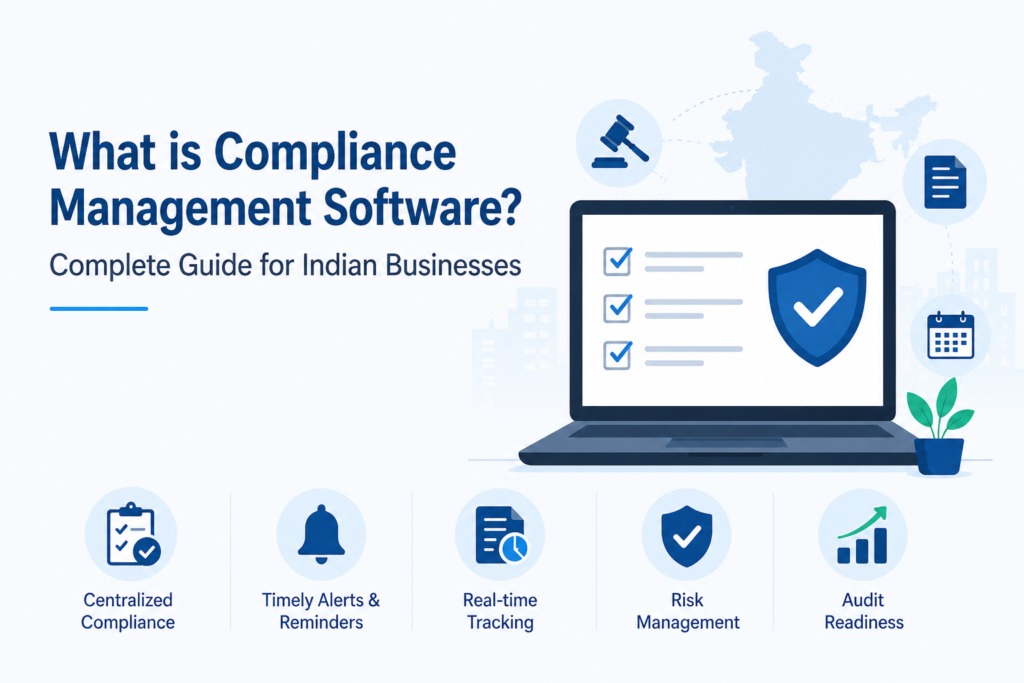
Managing compliance manually can create legal risks, project delays and bring visibility challenges for businesses. The right technology solution helps organizations streamline compliance processes and maintain better control over regulatory obligations.
This blog explains what compliance management software is, how it works and why it is becoming essential for Indian businesses.
Businesses today must manage a growing number of regulatory requirements across labor laws, environmental regulations, taxation, industry-specific mandates and corporate governance obligations. This is where compliance management software helps organizations identify applicable compliances, set up a process to track compliance tasks, monitor progress and maintain better control over compliance processes.
As regulatory expectations continue to broaden, organizations need structured systems with AI capabilities that can support compliance monitoring while reducing operational burden. Technology-driven solutions offer a practical way to improve compliance performance and mitigate risks.
Why Is Compliance Becoming More Challenging for Indian Businesses?
Regulatory compliance is no longer limited to a few annual filings. Organizations are now expected to manage multiple obligations across departments, locations and business functions.
Several factors contribute to this complexity:
- Frequent regulatory changes
- Multi-state operational requirements
- Industry-specific compliance obligations
- Increased reporting expectations
- Greater focus on corporate accountability
As businesses expand, manual tracking methods often become difficult to manage. Missed obligations can lead to penalties, legal exposure and reputational damages.
To address these challenges, many organizations are adopting compliance management systems that provide a structured framework for monitoring obligations and real-time compliance reporting. Management compliance software not only helps streamline workflows, but also improve visibility across compliance functions.
What Is Compliance Management Software?
Compliance management software is a technology platform designed to help organizations identify regulatory obligations, monitor compliance activities, automate compliance responsibilities and maintain records in a centralised environment.
Instead of relying on spreadsheets, emails and manual reminders, organizations can use software to create a more organised compliance framework.
The primary objective is to help businesses:
- Track compliance obligations
- Monitor task completion
- Assign accountability
- Maintain documentation
- Generate reports
- Improve compliance visibility
A centralised approach enables management teams to gain a clearer understanding of compliance status across the organization.
Businesses looking to implement a dedicated solution can explore Komrisk, Lexplosion’s compliance management software, which helps organizations manage statutory and internal compliance, regulatory updates, alerts, workflows and reporting from a centralized platform.
How Does Compliance Management Software Work?
Most compliance solutions follow a structured process that supports compliance lifecycle management.
The process typically includes:
- Compliance Identification: Organizations identify applicable laws, regulations and industry-specific compliances relevant to their operations.
- Obligation Mapping: Compliance requirements are assigned to responsible departments, teams and individuals.
- AI Support: Helps users and reviewers to assist them using AI support to understand and complete compliance tasks.
- Task Tracking: Tasks are scheduled and monitored through automated workflows and reminders.
- Evidence Management: Supporting documents and records are stored for future reference and audit readiness.
- Reporting and Monitoring: Management teams can review dashboards and reports to assess compliance performance and identify gaps.
This approach improves transparency and helps organizations maintain better control over compliance activities.
What Should Organizations Consider Before Selecting a Compliance Management Solution?
When evaluating a compliance management platform, organizations should consider:
- Regulatory coverage
- Centralized compliance repository
- Regulatory update monitoring
- Automated alerts and escalations
- Compliance calendars
- Workflow management
- Reporting and dashboards
- Multi-location support
- Internal compliance management
- Data security
- Vendor expertise and support
Organizations looking for an enterprise-ready solution can explore Komrisk’s compliance management platform, which combines regulatory monitoring, automated compliance workflows, reporting and centralized compliance management.
What Features Should Businesses Look For?
Not all solutions offer the same capabilities. Organizations should evaluate platforms based on their operational requirements and regulatory environment.
Important features include:
- Centralized compliance repository
- AI assistance in compliance understanding and task completion
- Automated alerts and notifications
- Workflow management
- Compliance calendars and integrations
- Audit trail
- Role-based access controls
- Reporting dashboards
- Document management capabilities
- Easily scale as your business grows
A robust platform should support scalability while adapting to changing regulatory requirements.
What Are the Benefits of Using a Compliance Solution?
The value of a compliance platform extends beyond regulatory tracking. It supports broader business objectives by improving efficiency and strengthening governance practices.
Key benefits include:
- Better Visibility: Management teams gain real-time insights into compliance status across locations and departments.
- Improved Accountability: Clearly assigned responsibilities help ensure that compliance tasks are completed on time.
- Reduced Operational Risk: Early identification of non-compliance issues helps organizations take corrective action before risks escalate.
- Enhanced Documentation: Centralized recordkeeping improves audit preparedness and evidence management.
- Greater Process Efficiency: Automation reduces manual effort and improves consistency across compliance activities.
Many organizations implement compliance management system software to create a more structured and sustainable compliance framework.
Why Are Indian Businesses Investing in Compliance Technology?
The regulatory landscape continues to evolve rapidly. Businesses require tools that can adapt to changing obligations while supporting operational efficiency.
Organizations evaluating compliance management software in India often prioritize visibility, scalability and ease of implementation.
Technology adoption is also being driven by:
- Increased regulatory scrutiny
- Growing business complexity
- Constant regulatory changes
- Expansion into multiple jurisdictions
- Demand for stronger governance practices
- Need for better reporting capabilities
As compliance expectations grow, digital transformation is becoming an important part of compliance management strategies.
How Does Automation Improve Compliance Performance?
Manual compliance tracking often depends on individual follow-ups and fragmented processes.
Automation introduces consistency and helps organizations reduce dependency on manual interventions by 60-80%.
Benefits of automation include:
- Timely reminders
- Workflow standardization
- Faster reporting
- Improved task completion rates
- Better record maintenance
Many organizations are turning to automated compliance software to improve operational efficiency while reducing compliance-related risks.
Organizations seeking the best compliance management software often prioritize automation capabilities because they support long-term compliance sustainability.
Additionally, modern management compliance software solutions help organizations manage larger compliance programs without significantly increasing administrative effort.
How Does Compliance Software Support Legal and Governance Functions?
Compliance and governance are closely connected. Effective compliance management contributes to stronger internal controls and better organizational oversight.
A reliable legal compliance software solution helps organizations monitor legal obligations, maintain documentation and strengthen accountability mechanisms.
By integrating compliance activities into a centralized framework, organizations can improve governance standards while enhancing operational transparency.
What Should Organizations Consider Before Selecting a Solution?
Selecting a compliance platform requires careful evaluation of business requirements and long-term objectives.
Key considerations include:
- Regulatory coverage
- Ease of use
- Scalability
- Reporting capabilities
- Integration flexibility
- Vendor expertise
- Customer support
Organizations should assess whether the platform can support current needs while remaining adaptable to future regulatory changes.
How Can Businesses Build a Stronger Compliance Framework?
Technology alone is not enough. Organizations should combine software adoption with clearly defined processes and accountability structures.
A strong compliance framework typically includes:
- Defined ownership
- Regular monitoring
- Documented procedures
- Continuous training
- Periodic reviews
- Executive oversight
When supported by the right technology, these elements help create a culture of compliance across the organization.
Strengthen Compliance Through Technology
Managing compliance effectively requires more than tracking deadlines. Organizations need visibility, accountability and structured processes that support ongoing regulatory obligations.
The right compliance management software enables businesses to streamline compliance activities, improve governance practices and reduce regulatory risk. With technology-driven solutions from Lexplosion, organizations can build a more efficient and sustainable compliance framework for long-term success. While establishing these organizational frameworks is vital, deploying an enterprise-grade regulatory compliance management software is essential to map, manage, and audit your statutory requirements seamlessly across multiple states.
Key Takeaways:
- Regulatory complexity continues to increase across industries.
- Manual compliance management can create operational challenges.
- Centralized technology improves compliance visibility and accountability.
- Automation helps reduce administrative effort and compliance risks.
- Compliance software supports governance, reporting and audit readiness.
- Organizations should evaluate solutions based on scalability and business needs.
- Lexplosion helps organizations strengthen compliance management through technology-driven solutions.
FAQs:
1. What is compliance management software?
Compliance management software is a platform-based solution that helps organizations track, monitor and manage regulatory compliances through centralized workflows and reporting automations.
2. Why do Indian businesses need compliance software?
Indian businesses face numerous regulatory challenges. Compliance software helps improve visibility, accountability and compliance performance while reducing compliance risks.
3. Can compliance software reduce compliance risks?
Yes. Compliance software helps organizations monitor obligations, identify gaps early and take corrective actions before issues become significant risks.
4. What features are important in a compliance management solution?
Key features include automated reminders, compliance calendars, workflow management, reporting dashboards, document storage and audit trail functionality.
5. How can Lexplosion help organizations manage compliance?
Lexplosion provides technology-driven compliance solutions that help organizations streamline compliance processes, improve monitoring capabilities and strengthen governance frameworks.

Lexplosion Solutions
https://lexplosion.in/Lexplosion Solutions Private Limited is a pioneering Indian Legal-Tech company that provides legal risk and compliance management solutions through cloud-based software and expert services.