CPCB issues Guidelines for Collection, Handling, Storage, and Transportation of Waste Batteries
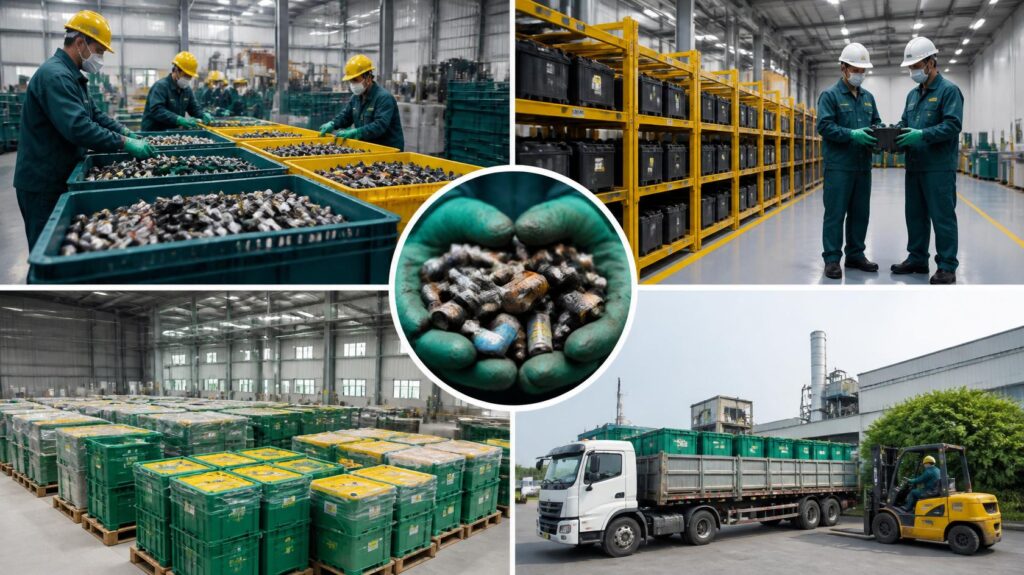
The Central Pollution Control Board (“CPCB”) has issued the Guidelines for Collection, Handling, Storage, and Transportation of Waste Batteries (“Guidelines”) under the Battery Waste Management Rules, 2022. The Guidelines prescribe environmentally sound procedures for the collection, handling, storage, transportation, refurbishment, and recycling of waste batteries to ensure their safe and environmentally responsible management.
Key Highlights under the Guidelines:
- Collection centres for waste batteries must obtain Consent to Establish/ Consent to Operate/ Hazardous Waste Authorization from respective SPCBs/PCCs (as per the Classification of Sectors into Red, Orange, Green, White and Blue Categories issued by CPCB.)
- The site plan of the collection facility should be submitted to the SPCB / PCC to assess and approve the facility’s storage capacity.
- Only recyclers, refurbishers, or producers are allowed to set up collection centres to prevent mishandling, illegal operations and ensure safe handling of these batteries.
- Collection centres must submit Annual Returns to the concerned SPCBs / PCCs of the previous FY by 30th June of every year as per FORM 4 of the Hazardous and Other Wastes (Management and Transboundary Movement) Rules, 2016.
- Collection centres must install weighing equipment to weigh every delivery of waste batteries received and maintain records of the quantity and type of waste batteries collected, including lead-acid, lithium-ion, zinc-based, etc.
- Collection centres must provide separate spacing for storing different types (Portable, Automotive, Industrial, EV) and kind (Lead acid, Lithium-ion, Zinc-based, Nickel-Cadmium, etc.) of waste battery.
- Every producer, collection centre, recycler, and refurbisher may store waste batteries for a maximum period of 90 days. They are also required to maintain records of the collection, sale, transfer, and storage of waste batteries and produce such records for inspection, as and when required.
- The waste batteries must be packaged in a way that prevents contact with other devices, conductive materials, or fluids such as acid or water, and ensures protection against weather conditions, such as rain.
- Containers used for transporting waste batteries must be securely packed in the transport vehicle to prevent movement during transportation and should be properly bound, shrink wrapped, or stacked.

Lexplosion Solutions
https://lexplosion.in/Lexplosion Solutions Private Limited is a pioneering Indian Legal-Tech company that provides legal risk and compliance management solutions through cloud-based software and expert services.